Showing posts with label India. Show all posts

Friday, March 19, 2021

The ancient fabric that no one knows how to make, gossamer muslin, made of tree cotton

 Gossamer muslin,  made in India and Bangladesh


The ancient fabric that no one knows how to make


The original muslin from Bengal, in eastern India for clothing, quilts and sheets was not made of the cotton that grows on bushes but from a distinct type of cotton that grows on trees. A much softer cotton. So gossamer it's like spinning spider's web silk. The stuff of fairies.

It is usually handwoven into fabric that is sheer, super light weight.

The Indian name for this tree cotton is "phuti karpas", pronounced footee karpass. The Latin name is Gossypium arboreum.

There is more heavyweight muslin out of regular shrub cotton used for all kinds of things too, like bags or ordinary sheeting fabric. This post is about the very fine muslin, made of "tree cotton", handwoven in Bengal India.


MUSLIN SPINNING AND WEAVING

In Kalna, West Bengal, we visited Rajib Debnath. He and his father Jyotish are reviving the art of muslin jamdani weaving.

The raw cotton is spun by hand into a thread finer than a hair from my head (see below). The cotton is handpicked in Kerala and Maharashtra and then spun by women with very good eyesight.


Jamdani is a fine muslin cloth on which decorative motifs are woven on the loom, typically in grey and white.


Different types of cotton plants


How tree cotton looks, Gossypium arboreum


Our Story of Dhaka Muslin

“What’s muslin?”

Muslin, he said, was the name of a legendary cloth made of cotton, fit for emperors, which used to be made way back in the past. Muslin from Dacca had been the finest, he said, from where it used to be shipped to the far corners of the world. 

THE WORD “MUSLIN” is popularly believed to derive from Marco Polo’s description of the cotton trade in Mosul, Iraq. (The Bengali term is mul mul.) A more modern view is that of fashion historian Susan Greene, who wrote that the name arose in the 18th century from mousse, the French word for “foam.”

Muslin today has come to mean almost any lightweight, gauzy, mostly inexpensive, machine-milled cotton cloth. The word has lost all connection to the handwoven fabric that once came exclusively from Bengal.


The cliché in India and Bangladesh is that 6 yards of fabric is so fine, it can pass through a finger ring

Revival of Dhakai Muslin: Commercial production will create global market

Durga Puja Off White Behula Dhakai jamdani Saree Soft Finish Women Formal Sari from West Bengal hand Weaving 603


Bengal’s weavers revive muslin, spin success

How fine muslin can pass through a finger ring. Its revival has improved livelihoods of many spinners and weavers (Photo by Gurvinder Singh)

Reviving Muslin


Hand woven muslin cloth, sheer, super light weight and gossamer soft


Rajasthan, India is famous for its super soft muslin sheets and lightweight quilts, called razai.

These quilts are lightly filled with cotton or kapok.

Fairy soft, lightweight sheets are made of muslin, often called mul mul in India. 


On eBay for example the words used to find these super soft, light quilts or muslin cotton fabric might be


Rajasthan traditional Sanganeri Jaipuri rajai or razai, Dhaka or Dhakai 

muslin Behula rajdani 


On PicClick, under the search for Jaipuri razai

Exquisitely lightweight kurta (India tunics) and other articles of clothing made of sheer muslin are made in the Indian city of Lucknow. Super soft. They are starched in the photographs to hold their form.

Buyable on Etsy at 

LucknowiArts

The Killian Kurta at Lucknowi Arts on Etsy

Wednesday, September 5, 2018

The Nelong Valley in India on the Tibetan border

From 1975 to 1981 I lived in the northwestern Himalayas in India. I was a student of Buddhism there, studying with various Tibetan lamas. During that time I lived on and off in the Manali area for 4 years and took long walks, hikes in the mountains. I came to really love walking there, eye level with birds flying over the river valleys below. There were huge views of mountains and valleys, I savored the sounds of the rivers, birdsong, watching langur monkeys, ibex, flying squirrels, pikas, all kinds of butterflies, being on the alert for bears and mountain wild cats. I loved picking wild strawberries, wild rhubarb, thyme, sage, the air aromatic with herbs and the smell of cedar trees, wild irises, rock roses, all the hillsides covered in apple, plum, peach, apricot trees.

I came to love the local hill people, the paharis, with their hand woven wool traditional clothing, their tanned and wrinkled faces, talking with locals while they stood there spinning wool on the hillside. 


The northwestern Himalayas in India, Himachal Pradesh and Uttarakand, is an especially beautiful part of this wonderful world. 

Today I came across a vintage film, a brief one about the Indian nomadic shepherds who traded with Tibetans. The film is of a valley a little further to the east of Manali, in the state of Uttarakand.

 I knew locals in Manali who had made their fortune that way, as an Indo-Tibet trader. Mr. Chandrabhaga, for example, who told me he used to take his mules up over the Rohtang Pass, onto the Tibetan Plateau, into Tibet. His mules were packed with sewing needles, matches, sugar, candles. Simple things it sounded like. He traded that with Tibetans for gold, turquoise and other things. He amassed his fortune and became a powerful landowner in Manali. So I was curious to see other traders like Mr. Chandrabhaga.

The nomadic shepherds of the northwestern Himalayas trade and have traded for a very long time, with the nomadic shepherds of western Tibet. This is a lovely little film about the nomads in India and that beautiful, remote part of India.

On the internet Archive, Tibetan Traders, 1957

Journal of a tour through part of the snowy range of the Himala Mountains, and to the sources of the rivers Jumna and Ganges
By James Baillie Fraser
Printed for Rodwell and Martin, London - 1820


A short contemporary video about the same place with some history


James Baillie Fraser

Views in the Himala Mountains, Rodwell & Martin, 1820, 
hand-coloured aquatint title and 20 fine hand-coloured aquatint plates by Robert Havell & Son after J.B. Fraser, versos with brushstroke marks from old adhesion, all plates reguarded at gutter margins, occasional small wormholes to margins, several plates with archival marginal repairs: plate VIII (Valley of Jumna) with longer closed tear repaired to right margin, plate XII (Assemblage of Hillmen) with small repaired tear to lower left corner, not affecting image, plate XV (Temple of Mangnee) with repaired long vertical crease to left side of the image, plate XVII (Junction of the Touse) with two small repaired patches to left hand blank margin, not affecting image, and plate XX (Jumnotree the Source of the River Jumna) with minor repairs to blank margins, plates interleaved with good quality thick wove paper, modern red half morocco gilt, upper cover with red morocco gilt label, sheet size 675 x 485 mm, elephant folio 

Provenance: Penelope Chetwode, Lady Betjeman (1910-1986), manuscript note at front presenting the book to her friend John Nankivell (b. 1941, architectural artist), in memory of their first Himalayan Temple trek, April-September 1971. Abbey Travel 498. "Among the finest aquatints of mountain scenery ever produced" (Godrej & Rohatgi). Rarely found complete. James Baillie Fraser (1783-1856) was a Scottish traveller and artist, who, following the end of the war with Nepal in 1815 travelled with his brother William to the Himalayas, spending two months exploring the region. They became the first Europeans to reach the sources of the Jumna and Ganges rivers. Tutored by the artist George Chinnery, Fraser was encouraged by William Havell to publish his sketches upon his return to Calcutta. Fraser's account of his travels was separately published as 'Journal of a Tour through Part of the Snowy Range of the Himala Mountains, and to the Sources of the Rivers Jumna and Ganges', with a map in the same year. "It is interesting, also, that Rodwell and Martin take the pains to say that the work is uniform with the Daniell (1795-1807) and the Salt (1809), neither of which folios was published by them." (Abbey). 


This coloured aquatint was made by Robert Havell and Son from plate 5 of JB Fraser's 'Views in the Himala Mountains'. Fraser and his brother William reached Rampur, the capital of Bushair State in the Himalayan foothills, on 12 June 1815. It was an important trading place for cashmere wool and was situated on the banks of the river Sutlej, which was crossed by the precarious rope bridge seen in the bottom left corner.

Bheem ke Udar - 1820

This coloured aquatint was made by Robert Havell and Son from plate 7 of JB Fraser's 'Views in the Himala Mountains'. While crossing the mountain pass between the valleys of the Ganges and Yamuna rivers, on their way to the source of the latter, Fraser and his party spent a night at this spot. It is named after Bhima, one of the five Pandava brothers in the epic Mahabharata. Fraser wrote: "Our encamping ground was ... a cave under a large stone, called Bheem-Ke-Udar; in a dry night it is sufficiently comfortable, but rain would readily beat in. In this cavern, and under a few other large stones around it, there was some shelter, though scanty for our company."

Wednesday, December 7, 2016

This is life. December 2016

Years ago, in 1978, I was living in the Himalayas, in Manali, India. My boyfriend, an American who was also studying Buddhism with Tibetan lamas in India, needed to go to the next small town, Kulu, to get his visa extended.

So we took the bus down the winding mountain road from Manali to Kulu and asked to see the police officer at the Foreigners' Registration Office. We were told to come back in several hours. After having a bite to eat, we decided to go see a Bollywood film at the small country cinema there.

The film was called Yehi Hai Zindagi” (This is Life). It was a marvelous, very entertaining film, a charmingly told morality tale. The "movie features LORD KRISHNA in it, visiting its lead hero Sanjeev Kumar at regular intervals, granting him all he wishes for in his life, of the material world. Though at first Sanjeev doesn’t believe that he is the GOD himself meeting him in person, so he very casually treats him as a ‘theater artist’ dressed in the attire of LORD KRISHNA. And even later, when he unwillingly has to accept the truth, he starts asking ‘Big things’ from THE LORD just to test his powers and KRISHNA goes on fulfilling his every single wish at an appropriate time.

However, the moment Sanjeev starts becoming rich from a poor labourer, his mind begins functioning differently, his EGO comes into action and from here onward the film gets into the mould of
 A LIFE TEACHING LESSON with many interesting twists and turns in its well written script. A pure gem for its every sequence of the enlightening interaction between KRISHNA (adorably played by Vikram Gokhale) and Sanjeev Kumar at the various phases of his life, the film has some exceptionally written dialogues which are so simple yet highly effective, that seriously force you to think making that instant connect. Particularly watch out for the conversations with the word “My Sin” 
which is simply outstanding, insightful work from both the writer and the director, still remembered as the key point of the film by many who watched it in the theaters".

That scene is my favorite. It is delightfully witty with its double meanings. The lead character, Sanjeev, is ill. He cannot eat all the many delicious foods with sugar and salt he loves because he now has diabetes and other ailments. Krishna points out that the names of all the antibiotics he's taking, Terramycin, Achromycin, Ladamycin, Garamycin, all end with the words, "my sin". The lesson is that because of the 'sin' of his egotism, harming others, there is karmic payback in the form of not being able to enjoy his life.

It's such a delight to be able to find that scene on YouTube now, after all these years. 

One of my favorite multi-cultural plays on words in film. Sanjeev says, when he turns and sees the radiantly blue Krishna, adorned with flower garlands and gold headdress, "Oh you." Krishna offers him all kinds of delicious foods. Sanjeev whines that he can only eat and drink bland things. Krishna says. "Have a seat." Sanjeev cannot sit because he has hemorrhoids. Then Krishna looks at the names of the medicines. When Sanjeev reads the names, Krishna points out the "my sin" endings of each of the medicines. Sanjeev starts to wake up to the reality of his misdeeds. 
I love the times Krishna appears and talks with Sanjeev. Such a warmly human, personal relationship between the Divine and Man, endearing.

Stunningly beautiful Nature pics by Stefano Ronchi.

How astounding macro photography can be! Love these extraordinary images.

Whoa. this is a butterfly's tongue.


Photograph by Jochen Schroeder

Chiang Mai, Thailand


Subject Matter:
Butterfly proboscis
This is a close-up of a butterfly's wing!


Photograph by Francis Sneyers

Brecht, Belgium


Subject Matter:
Scales of a butterfly wing underside (Vanessa atalanta)

A joyful video I like a lot
. With good recovery lyrics.

Nice info, concise and interesting. Every country in the world.


How terrible New York City would be without Central Park! The true story of how that almost happened. 
A map of the City of New York, from 1811.                                                                                                                      PHOTOGRAPH BY THE NEW-YORK HISTORICAL SOCIETY / GETTY
  An original copy of John Randel, Jr.’s Manhattan grid map at the County Clerk's Office, in New York. The intersection in focus, Sixth Avenue at West Eighty-sixth Street, is now a part of Central Park.PHOTOGRAPH BY MICHAEL APPLETON / THE NEW YORK TIMES / REDUX
Turkish Artist Paints Unbelievably Tiny Paintings Onto Small Objects

Thursday, September 10, 2015

Exquisite illustrations of life in India about 200 years ago

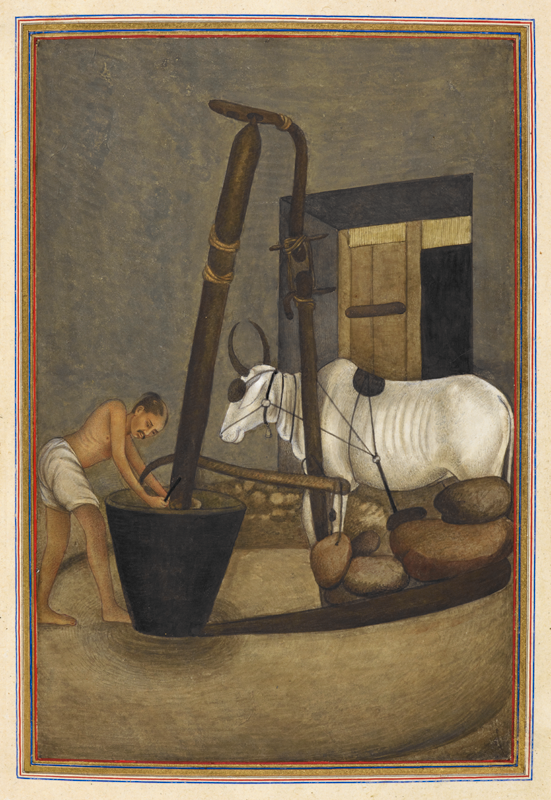
About 200 years ago in the early 1800's, there was an Anglo-Indian man, an adventurer, James Skinner, who commissioned portraits of people doing various jobs, fulfilling various roles, in India. 

When I lived in India from 1975 to 1985, many of these jobs continued, just as they had done for centuries and I feel, looking at these images, as if they are paintings of people I saw with my own eyes, doing the same things. 


Anyone who has traveled to India, and it's probably the same to this very day, can see people fulfilling these same roles in Indian society with very few, if any, changes. 


The quality of the painting of these images is marvelous. I love the details of each portrait, the trees, the shoes, landscapes, architecture. I only - and really -  miss seeing women fulfilling the many societal roles, other than "harlot", "conjurer" and acrobat, which were and are very much the same as many of the male roles, including those that were and are their own. 


Here is the man who commissioned these images, James Skinner. 

Colonel James Skinner,(1784-1841) or Sikander sahab was an Anglo-Indian military adventurer who is known for raising 2 cavalry regiments for the British, known as Skinner’s Horse. Even today they are part of the Indian army.
He spoke fluent Persian and is the author of the book Tashrih al-aqvam(an account of origins and occupations of some of the sects, castes, and tribes of India). It  was completed in 1825 and is part of the collection of the British Library.
Skinner translated into Persian the summary of the Vedas and Shastras with a survey survey of both Hindu and Muslim occupational groups and religious mendicants in the Delhi region.
The book also gives details of Hindu, Jain, and Sikh religious faqeers (mendicants) such as yogis and sanyasis as well as the Muslim Afghans of Kasur, qawwals, and fakirs.
The text was illustrated by a number of Delhi artists commissioned by Skinner for  the album, the chief of them being Ghulam Ali Khan. The watercolor paintings all seem to have been made from live subjects by the painter who accompanied Skinner on his travels."
These images below are from the Asia Society page, which offers no information about any of the specific images, only a brief general overview. I gathered as much information as I could about the images from this LessingImages.com page. some of the images have no descriptions that I could find on the web: 


Hindu Tantric ascetic


Kshatriya warrior 


A Vaishya, a Hindu trader


A Vaishya money lender


An astrologer with his divination board.


"Dakaut", impure Brahman caste, represented by a fortune teller.


An image of the elephant keeper in India riding his elephant from Tashrih al-aqvam (1825).


Female conjuror/Bhanmati


A bear-keeper with his dancing bear.


Nat – gypsy acrobat


A singer or bard. Bandijan or kalavant, a singer or bard from the Bhat caste.


A Harlot


Ship's captain, represented by the Mars, a naval battleship


Bhangi, a caste represented by a sweeper.


Chamar, a caste represented by a tanner.


Shoemaker. "Moci", Muhammadan shoemakers, an occupational sub-division of the Camars.


A dyer ("chimba" class) dipping cloth in red dye.


Man with a rifle. Dhanak, a caste formerly of bowmen and hunters.


A brush maker.

"Kanjar", a wandering tribe who make rope and articles of grass.


Bavari, an itinerant predatory tribe, represented by a bird-snarer.


Kahar, the carrier or bearer class of the eastern Panjab.


"Mallah", boatman class. Boatman in the River Ravi in the foreground with Lahore Fort beyond. 


Two men wrestling.


Macchi, a Muslim caste of fishermen.

Man with his Ghulam servant


Hajjam, a barber, i.e. Muslim barber as opposed to Hindu


A Bari leaf-worker. Bari, a caste that made plates and cups from leaves.


Jarrah, a caste of surgeons.


Baghban, a gardener. Making a garland.


"Kunjra", an occupational group represented by a greengrocer.


Coppersmith (Thathera).


Ahangar, the Persian term for the Lahore caste of blacksmith.


Bellmaker.


Weaver, Julaha, a Muslim caste of weaver.


A tape-weaver.


Rope-maker


Potter, Kumhar, the potter caste of the Panjab.


A brickmaker.


Goldsmith (Sunar). Sunar, the Goldsmith caste.


An artist seated, and at work. Tashrih al-aqvam.


Chipi (or chimba), a cloth printer. Printing green cloth with a red geometric design.


Khayyat (or Darzi), a tailor. Darzi is an occupational group rather than a caste but it is organised in the guilds.


Embroiderer.


A betel-nut seller preparing his wares.


Earpicker. A man cleaning another man's ears.


Kalal, a Hindu caste of distillers or tavern-keepers.


A professional criminal. Mina, a Hindu caste of professional criminals, represented by a man cutting through the wall of a building at night. 


"Raj", mason or bricklayer. An occupational sub-group of the "Tarkhan" or carpenter caste. Represented by a man ("raj") building the wall and another ("muzdur") mixing mortar.


Khati or Tarkhan, carpenter caste of the Panjab. Man sawing a plank.


Man attending a pilgrim.


Two actors. Bahrupiya, originally an occupational group of strolling players.


Washerman. Dhobi, a caste of washermen.


A cotton-dresser. Dhuniya or Pamjara, synonyms for the caste of cotton-dressers, represented by a masked man using a bow to prepare raw cotton. 


Acrobats. Nat, a caste of gypsy acrobats.


A water-seller. Saqqa, a Muslim caste of water-carriers.


Man sifting grain with a sieve. Agari, a grain-sifter.


Sweepings-sifter. A man searching sweepings for gold or silver.


A labourer wielding a pick.


Badhak or Qassab, the caste of butcher.


A snake-charmer of the Sapera caste.


"Bharbhumja", occupational caste of corn roasters. Man using a kiln type of brazier to roast grain.


A mat-weaver, possibly of the Dumna caste.


A screen-maker, possibly of the Dumna caste.


Polisher. (Term "Barhiya" caste applies to Hindus and "Saikalgar" to Muslims). Man polishing a "tulwar".


"Gandhi", a caste of perfumers or druggists. Surrounded by shelves of bottles, a man is pouring liquid into a bowl.


Ribari, a caste of camel-men.


Lime-burner. Cunari, a caste of lime-burners, in front of a kiln.


Runner or messenger ("paik").


Luniya, a caste of salt-diggers.


Kamdangar, a bowmaker. Shown bending the wood of a bow over a bowl of embers. 


Leather-bottle makers. (Presumably members of the "Chamaar" caste). 


Sannyasi, a Saiva mendicant.


"Paramahamsa", a naked ascetic, usually a Saiva.


"Dandi", a Saiva ascetic who possesses only a staff and a waterpot. 


"Sarabhanga" order of ascetics who did not believe in the ordinary ideas of pollution. 


A portrait of Bhajan Das Bairagi, a member of the Vaisnava order of ascetics, usually followers of Ramananda. 


"Nanga", a naked ascetic. This particular one is associated with the "Vairagis" and is armed with a spear, gun and tulwar.


"Dhundiya", a member of the strict "Sthanakavasi" sect of Jains. Wearing a mouthcloth to protect microscopic life from harm, he carries a brush to clear insects from his path.


Kanphata yogi. A Saiva ascetic with large earrings and wearing the 'linga' around his neck, accompanied by Tashrih al-aqvam. 1825 


"Jangama", a member of the priestly order of the "Virasaiva"


Nanakpanthi, a follower of the teachings of Guru Nanak, the first guru of Sikhism.


A Sikh


A Suthra Shahi, an order of Sikh devotees


Sadhu, Hindu renunciate.


Qusuri or Kusuri, a pathan of Kasur -Tashrih al-aqvam (1825)


‘Qawwal’, a sub-caste of the large Muslim caste of ‘Mirasis’ or singer/genealogists. A man beating a Dhol drum.


Sufi dervish


"Tashrih al-aqvam album

The illustrated Tashrih al-aqvam (an account of origins and occupations of some of the sects, castes, and tribes of India) was completed in 1825 and is part of the collection of the British Library.  The text, a summary of the Vedas and Shastras, translated into Persian by Colonel James Skinner (1778–1841), is a survey of both Hindu and Muslim occupational groups and religious mendicants in the Delhi region and begins with an account of the house of Timur down to Akbar II (reigned 1806–37). The largest section is devoted to the various Hindu castes found in the area around Delhi. In addition to these major occupational groups, The text also discusses Hindu, Jain, and Sikh religious mendicants such as yogis and sanyasis; after listing the kings of Avadh, the book describes the Muslim Afghans of Kasur, qawwals, and fakirs. The Tashrih al-aqvam, along with the Tazkirat al-umara(historical notices of some princely families of Rajasthan and the Panjab)—also by James Skinner and illustrated—are examples of a new kind of nonliterary Persian text written by, or under the patronage of the British that emerged in late Mughal literary culture and combined topography, biography, and ethnography.

Skinner commissioned Delhi artists to illustrate the album, the chief of them being Ghulam Ali Khan. The artist accompanied Skinner on his travels, and the watercolor portraits in the British Library manuscript are likely studies from life.The portraits in the Tashrih al-aqvam, especially those of ascetics, are done in a realistic manner that reflects the ethnographic quality of the text. Some figures are named. All of the paintings from the album may be viewed here."